Forward - Formosa Plastics Group, Medical Development Center - Health Guidebook Information
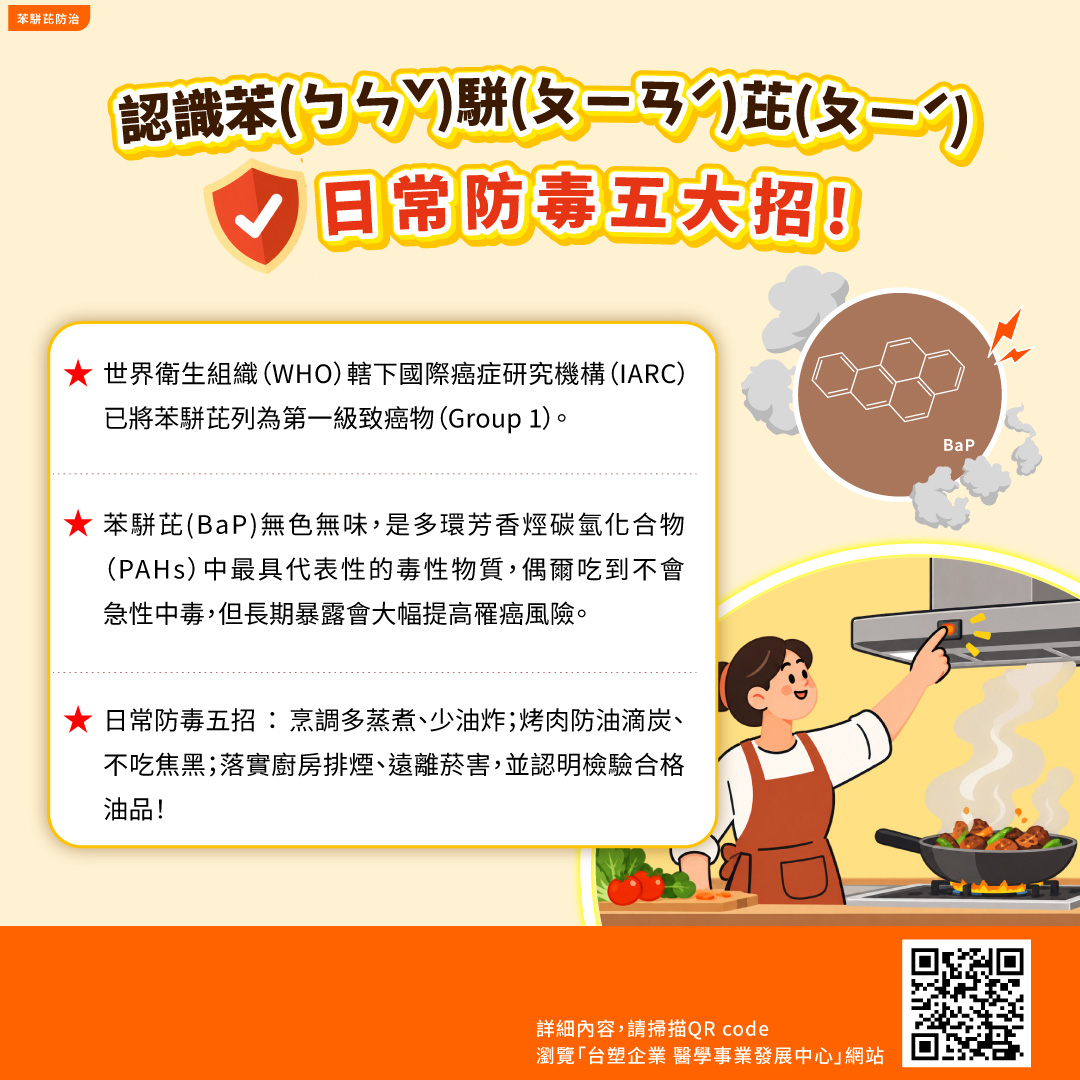
Taiwan has recently seen a series of major food safety incidents in which cooking oils were found to contain excessive levels of benzo[a]pyrene (BaP), drawing intense public concern. BaP is a representative polycyclic aromatic hydrocarbon (PAH) with clearly established carcinogenicity, and has been classified as a Group 1 carcinogen by the International Agency for Research on Cancer (IARC) under the World Health Organization (WHO).
PAHs are mainly produced when organic matter such as fats or proteins undergoes high-temperature pyrolysis or incomplete combustion. They may therefore come from environmental pollution, or form during food processing and cooking such as smoking, drying, baking and grilling. Once BaP enters the body, some of its active metabolites can bind to DNA, causing DNA damage and mutations; long-term, repeated or high-level exposure may increase the risk of cancer. However, health risks still depend on the dose and duration of exposure. Occasional small intake does not mean immediate poisoning or cancer, so there is no need to panic; the key is to reduce unnecessary long-term exposure in daily life.
Five everyday tips to reduce BaP exposure: (1) steam, boil and braise more, and deep-fry or char less; (2) when barbecuing, keep fat from dripping onto the charcoal and do not eat charred food; (3) turn on the range hood while cooking to reduce exposure to cooking fumes; (4) stay away from tobacco, quit smoking and avoid secondhand smoke; (5) choose oils that have passed third-party testing and come from clearly identified sources. Start with the details of daily life to protect your family's health!
Download and share here: https://tinyurl.com/3m4muhnw